


There is a particular kind of pride in a city that can look at itself and say: We outgrew that. Not abandoned, we outgrew.
Bangalore has been doing this for decades, shedding skins with the quiet confidence of a place that knows the next version of itself is already fermenting somewhere.
Its latest transformation from India’s “Pub City” to a bona fide brewery destination is perhaps its most aromatic yet.
A colonial inheritance
The roots run deep, and they run Scottish. When Thomas Leishman established Castle Brewery in the late 1850s, he was catering to British soldiers stationed in Bangalore’s cantonment men homesick for something cold and amber. The city, it turned out, was a natural fit. Its altitude kept temperatures mild, its British garrison kept demand high, and its political establishment kept the tap open.
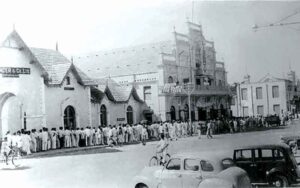
(Image Source: United Breweries)
(Image Source: United Breweries)
That last point matters enormously. Karnataka, uniquely among South Indian states, never attempted Prohibition, thanks in part to the considerable influence of its liquor lobby. While neighbouring states experimented with bans and restrictions, Bangalore’s relationship with beer remained, to use the technical term, unimpeded. In 1947, when Vittal Mallya bought up United Breweries shares from departing Englishmen, the city’s beer culture simply changed hands rather than culture. Kingfisher was born, and with it, an identity.
The pub years: an era of camaraderie
By the 1980s and 90s, Bangalore’s IT boom had done something interesting to its social fabric. The arrival of engineers, expatriates, and entrepreneurs people who had lived elsewhere and expected certain things from a night out supercharged the pub scene. MG Road and Brigade Road became what Soho is to London or the Latin Quarter to Paris: not just streets, but shorthand for a way of spending an evening.
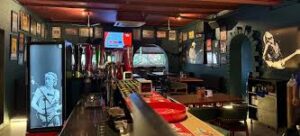
(Image Source: Pecos, Zomato District)
Pecos, Guzzlers Inn, Windsor Pub, Watsons. These weren’t just drinking establishments; they were institutions. You went for the Kingfisher on draught, stayed for the conversation, and left with the vague sense that something important had just happened, even if you couldn’t quite say what. Bangalore earned its “Pub Capital of India” title honestly, one crowded Friday night at a time.
But by the early 2000s, a certain restlessness had set in. The city’s residents, increasingly well-travelled and increasingly curious, had tasted something different abroad. They’d had an IPA in Portland, a wheat beer in Munich, a session ale in East London. They came home wondering why they couldn’t have that here.
The craft spark: 2010–2012
The answer, it turned out, was mostly paperwork. Karnataka moved earlier than most Indian states to ease microbrewery licensing, a regulatory decision that, in retrospect, changed the character of the city as surely as any infrastructure project ever did.
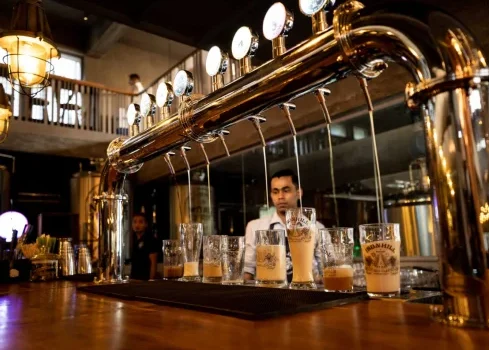
The first craft brewery opened in 2010, and something shifted. Not immediately, revolutions rarely announce themselves — but perceptibly. By 2012, Toit, Biere Club, and Arbour Brewing Company (the American brewery’s first overseas outpost) had opened their doors, and the conversation changed. Beer was no longer just a drink. It was a subject.
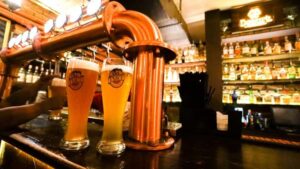
(Image Source: Toit)
Brewmaster Umang Nair captured the moment precisely: “The young generations are not satisfied with whatever they are being sold at liquor shops. They are willing to spend, and they are eager to try something new.” Karnataka’s progressive licensing had given entrepreneurs the green light. The city’s appetite gave them the customers.
Scale, ambition, and the brewery-as-destination
What happened next was less an evolution than an escalation. Byg Brewski arrived at 65,000 square feet, sprawling green lawns, burning torches, a pond, live music echoing into the Bangalore night. It felt less like a pub and more like a festival that never quite ended. Then came Ironhill in March 2021: 1,30,000 square feet, a legitimate claim to the title of world’s largest brewery, and a statement of intent that the city had not finished surprising people.
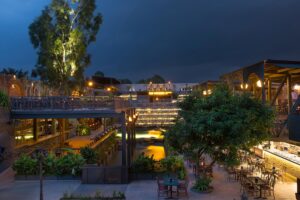
(Image Source: Byg Brewski)
These aren’t just large spaces. They are, in the truest sense, destinations where you might arrive for a tasting flight and leave four hours later, having eaten, listened to a band, walked the grounds, and discussed the relative merits of a Belgian witbier versus a Bangalore pale ale with someone you have only just met. That is a different kind of evening than Pecos offered. Not better, necessarily. But different, and deliberately so.
What it means now
The story of Bangalore’s beer scene is ultimately one of continuity, not rupture. The same city that built its social life around cold lagers and loud music on MG Road is the city that now hosts over a hundred microbreweries producing everything from mango sours to oatmeal stouts. The spirit is identical. Only the ambition has grown.

(Image Source: Arbour Brewing Company)
A colonial legacy of beer, a politically permissive state, a tech-driven influx of globally exposed residents, and an entrepreneurial hospitality scene all converged over seven decades to produce something the soldiers in Leishman’s cantonment could never have imagined: a city that doesn’t just drink beer, but makes it with care, with curiosity, and with a certain distinctly Bangalorean confidence that whatever comes next will be worth tasting.
Author