



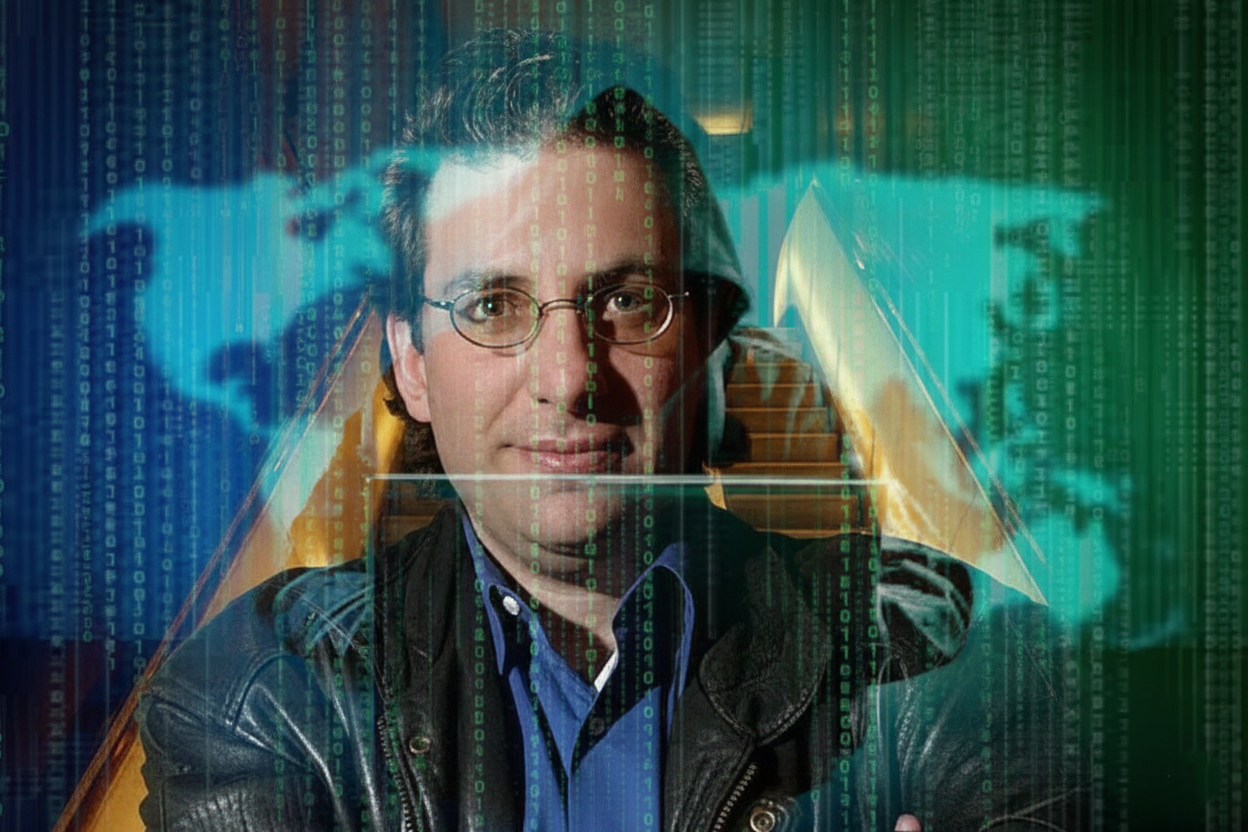
Kevin Mitnick’s Legacy
In the rarefied air of high stakes intellect, where genius is the ultimate currency, few names resonate with the mythic weight of Kevin Mitnick. He was not merely a hacker; he was a virtuoso of the virtual, a maverick who didn’t just circumvent rules, but masterfully rewrote the fundamental code of social interaction itself. Long before cybersecurity became a necessary fixture on the boardroom agendas of global corporations, Mitnick treated the world’s information infrastructure as his personal, unbounded playground.
His captivating narrative transcends simple intrusion; it is a masterclass in social engineering, a psychological ballet where the human mind, rather than the computer’s architecture, was the territory he navigated.
The Genesis of a Digital Alchemist
Mitnick’s exceptional brilliance was evident early, driven not by malice, but by an insatiable curiosity that bordered on artistry. At the age of 12, while his contemporaries were engaged in mundane activities, Mitnick was already deconstructing the sophisticated transit systems of Los Angeles. His entry was not through brute force, but through charm he persuaded a bus driver to reveal the location for purchasing a specialized ticket punch.
This was his inaugural act of social engineering, a sophisticated term for his uncanny ability to manipulate human trust. He sought free rides, not for the negligible savings, but for the sheer, intoxicating rush of intellectually outsmarting the system. It was a clear demonstration of intellectual aristocracy, the profound realization that the world is replete with locked doors, and he possessed the skeleton key.
From Curiosity to Corporate Chess
As his skills matured, so did his canvas. The corporate monoliths of the 1980s and 90s including giants like Digital Equipment Corporation, Pacific Bell, and Motorola became his formidable adversaries in a high-stakes game of digital chess.
Mitnick’s modus operandi was defined by its sheer elegance. He rarely needed to crash through a digital firewall when he could effortlessly ask for the password. He would assume the persona of a pressured colleague or a senior executive, deploying a charisma so compelling that even seasoned system administrators willingly surrendered access to multi-million dollar networks. Known as the “Ghost in the Wires,” he was an elusive phantom capable of accessing the proprietary source code of the world’s most valuable technology companies. His motivation was not monetary theft; it was the acquisition of secrets, the rarest vintage of data fueled by an unyielding compulsion to prove that no digital fortress was truly impregnable.
The Cat and Mouse Game: A Digital Duel

Every enduring legend requires a formidable adversary. For Mitnick, that figure was Tsutomu Shimomura, a revered computational physicist and security expert. Their intense cat and mouse game in the mid-1990s has since become the subject of cinematic lore. When Mitnick breached Shimomura’s personal computer, it was more than just a hack; it was a gauntlet thrown down from the pinnacle of digital mastery.
The ensuing FBI manhunt was less a traditional police operation and more a global pursuit of a digital specter, concluding only when the massive weight of the federal government was brought to bear against the singular force of one man’s intellect.
From Shadow to Security Asset
Today, the man once branded the “World’s Most Wanted Hacker” has undergone a remarkable metamorphosis, becoming the world’s most exclusive security asset. Mitnick transitioned from operating in the shadows to advising in the boardroom, commanding premium fees to secure the very corporations he once effortlessly confounded. It stands as the definitive redemption arc for the modern professional: the rebel who conquered the establishment, only to be hired to safeguard its future.
A Lesson for India’s Tech Capital: Mitnick’s Echo in Bengaluru

Mitnick’s enduring legacy offers a profound, crucial lesson, particularly resonant for the professionals of Bengaluru, India’s burgeoning tech capital and its own Silicon Valley of India. In this
dynamic metropolis, where the digital realm intersects with immense corporate value, national security interests, and the economic future of millions, Mitnick’s comprehensive understanding of the human element often termed Social Engineering remains the ultimate teaching. His methods underscore the critical truth that the weakest link in any security chain is rarely the technology itself.
The influence of this lesson on the citizens of Bengaluru, a city deeply entrenched in the Information Technology (IT) sector and home to global giants and innovative startups alike, is
subtle yet pervasive. As the city’s tech landscape matured over the past two decades, the primary focus naturally rested on building increasingly impenetrable firewalls, developing complex, Quantum resistant encryption algorithms, and deploying robust, fault-tolerant hardware infrastructure. Mitnick’s saga, however, serves as a powerful, real world case study for every Bengaluru IT executive, security architect, and software engineer, true power and, consequently, true vulnerability lie not solely in the hardware or code, but in the understanding and management of the people who operate, maintain, and are entrusted with access to these sophisticated systems. The sheer volume of sensitive data passing through Bengaluru’s corporate servers makes this a non-negotiable area of focus.
For the Bengaluru executive, constantly balancing aggressive growth with rigorous security compliance, Mitnick’s story highlights the exquisite truth, in a world structured by binary zeros and ones, where billions are invested in Artificial Intelligence and Machine Learning defenses, the most sophisticated and effective exploit is often nothing more complex than a charming, persuasive, and carefully researched voice on the other end of the line a voice that leverages human traits like helpfulness, fear, urgency, or simple curiosity. Mitnick’s success was rooted in manipulation of human psychology, not solely in exploiting code vulnerabilities. It is a persistent reminder that the best technology, regardless of its computational power or cryptographic strength, is only as strong as the human trust it is built upon and the human vigilance that defends it. Therefore, a modern security strategy for a city like Bengaluru must prioritize comprehensive, continuous, and realistic training on social engineering defense, shifting the security paradigm from purely technical defenses to a unified strategy that integrates technical rigor with human intelligence and skepticism. The human firewall must be as strong as the digital one.
Author