



Every city has an art scene. Bengaluru has an art underground — discreet, experimental, and fiercely exclusive. While the mainstream writes of festivals and open shows, the real story lies in how the city’s best and brightest are curating creativity away from public gaze.
Bengaluru has always defied easy categorization — too modern to be only heritage, too rooted to be only global. Its art mirrors this duality. For the city’s affluent circles, art is more than acquisition. Art is their legacy. It is a mirror of their own lives in a city constantly rewriting itself. But what makes this scene remarkable is its ecosystem. The city’s wealthy aren’t just patrons to the artists who bestow colours upon the legacy of this city; they are co-conspirators, hosting clandestine showings in private penthouses, commissioning performances for audiences as small as ten, attending and organizing auctions worth tens of millions and attended by only a handful of the ultra-wealthy, and funding collectives that thrive on exclusivity.
Across the creative hubs and the experimental enclaves of the city, artists are producing work that speaks directly to the Bengaluru experience. An exclusive collective is sculpting art as investment, moulding the city’s disappearing rain trees into organic furniture-art hybrids, and organic-artificial hybrid sculptures, available only to select buyers. A photographer is documenting Bengaluru’s rooftops, transforming them into limited-edition prints that capture the unseen private skyline of the city’s diaspora.
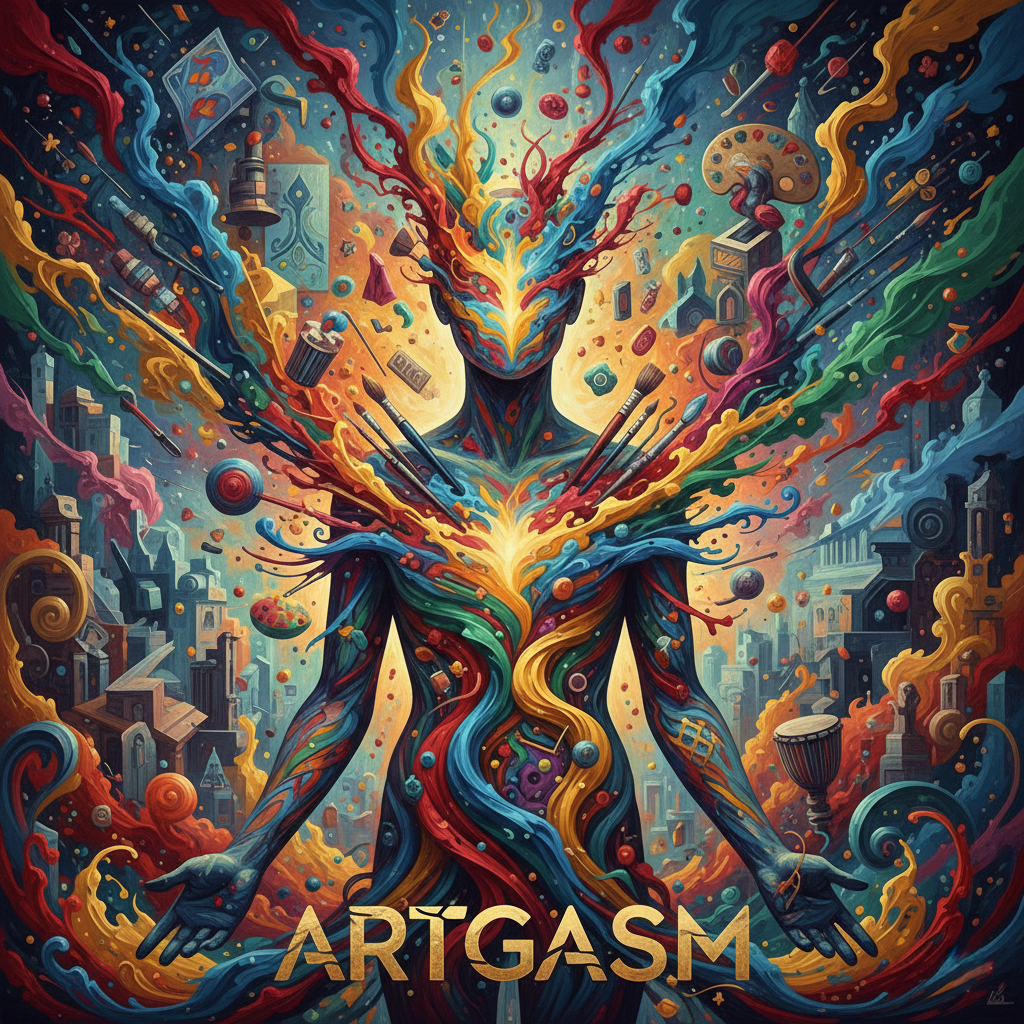
Artgasm will prove that great art is one of life’s greatest pleasures. That art is not just about ownership or display. It is also about living inside creativity, about building private worlds where expression flows as freely as ambition. For those with access, this is the new luxury: art not only as spectacle, but also as sanctuary.
Author