




Helping Students Survive: A New Lens on Mental Health in India
Mental health is the silent elephant in the room that has quietly taken a seat directly in front of India’s youth today. For students, especially those laboring away in competitive academic communities, the mission to perform and succeed is as exhausting and relentless as it has ever been. A growing coaching culture, challenging college curriculum, keeping up with those on social media, and pressure from family create a steady emotional load too heavy for many young people to carry.
In India, this pressure is now becoming visible in some terrifying ways. Student levels of anxiety, depression, and burnout continue to rise every year, and the country records tens of thousands of student suicides every year—a national crisis that can no longer be ignored. While education and career aspirations take over public discourse, mental health conversations are few, with topics usually being camouflaged due to stigma, embarrassment, or fear of judgment. Mental health difficulties among students are not just individual issues, as they negatively affect academic performance, interactions, and self-identity. In urban locations like Bengaluru, the intensity of competition and larger goals can make feelings very strong. Being aware of this is necessary for India if it needs its cities to be more secure and to support better health for the youth.
Bengaluru’s Promise and Pressure on Young Minds
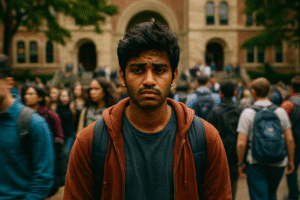
Bengaluru, known as one of the educational and career hubs in India, has over 1,100 colleges offering several majors. Every year, the city sees a large population of students arrive with aspirations and dreams. While most are from Karnataka, thousands of students come from across the country, and over 6,000 are foreign students. Students from outside the city see an ocean of opportunities in terms of education, exposure, and career. However, moving to Bengaluru and adapting to its environment is a task on its own.
Once students arrive, they discover the kind of intense competition the city holds. Whether they are studying engineering, media, marketing, or design, every college has ambitious young talent that wants to match or stand out. This constant comparison is sometimes subtle and at times it is obvious, becoming one of the reasons that triggers peer pressure. This constant competition takes a toll on their mental health.
The Overlapping Stress of Studies, Social Life, and Social Media
Academic Stress
Academic stress is probably one of the major types of stress students experience in achievement-oriented places like Bengaluru. Students feel pressure to get high marks, get ready for entrance tests, try to pass competitive exams, and also earn extra certifications for having a stronger resume. Bengaluru student Priya sees the academic landscape as one of “immense opportunity and high expectations”. She feels internal pressure to maintain a strong GPA, essential for securing positions at top tech firms, noting that the city’s innovative culture drives her to set a high bar.
When students see their friends perform well, get internships, or add certificates, they might feel uncomfortable or start doubting their skills. This may cause more anxiety and less motivation, instead of encouraging positive thinking. Due to this self-doubt, students end up trying to push their capacities beyond control. Later, this turns into nervous breakdowns or exhaustion, often resulting in long-term stress or a lack of the will to study further.
Social Pressure
Social pressure is another major concern. Bengaluru has a vibrant college culture, with fests, events, and social media trends that make students feel they must follow them to ‘fit in’ and be accepted. Students work on everything from fashion to lifestyle just to match their peers and fit in with their friend circles and the party culture. Many end up overspending or participating in uncomfortable activities just to fit in. This constant need to maintain an image and gain approval makes students feel lost and insecure, taking a major toll on their mental health and financial condition.
Social Media and FOMO

The rise of social media has made peer pressure even more intense, with every student wanting to have an internet presence to feel relevant. Platforms like Instagram are used to show off people’s curated lives and achievements. This comparison breeds envy, insecurity, and Fear of Missing Out (FOMO), causing them to question their own worth and achievements. Maya, a university student, called the culprit “90% social media,” observing that curated photos make real life “feel boring or crap” and that this chronic comparison is a “tough hit on self-worth” and self-esteem. She called it “The comparison trap that makes you feel perpetually behind”. This pressure leads students to overcommit and creates “an intensity to be everywhere all the time”. Even the decision to study causes anxiety about missing a major social opportunity.
India’s Student Suicide Crisis and the Role of NIMHANS
The alarming rise in student suicides in India is due to the educational system putting undue pressure on students and a society habituated towards shaming emotional distress. Students confront ceaseless, high-stakes academic competition, especially for entrance exams like NEET and JEE. The stigma of failure is often seen as a catastrophic let down that slams shut future prospects, plunging many into incessant anxiety and loneliness. The stigma that groups illness with personal weakness causes students to avoid seeking help, a situation made worse by chronically inadequate professional support in schools.
The statistics are deeply troubling: NCRB data shows that the number of student suicides escalated by approximately 65% between 2013 (around 8,423 cases) and 2023 (13,892 cases). This highlights the growing vulnerability of this demographic, driven by intense academic pressure, unrealistic family expectations, and inadequate mental health support. The state of Karnataka consistently reports high figures, prompting the state government to implement specialized programs like the NIMHANS-led Project SURAKSHA and mandate counselling rooms in educational institutions.
Ragging as a Factor
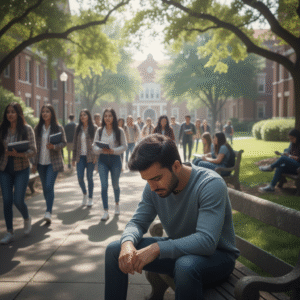
Ragging is a very serious criminal offence in Indian schools and colleges, involving humiliation or intimidation that can border on physical abuse. The brutal reality of ragging is reflected in statistics: as per the UGC, a total of 25 students committed suicide between January 2018 and August 2023 after being ragged. In the three years between 2022 and 2024 alone, there were 51 ragging-related deaths (suicides and murders) across Indian universities and colleges. The UGC enforces a zero-tolerance policy, requiring institutions to establish dedicated Anti-Ragging Committees and Squads for immediate action.
The Critical Role of NIMHANS
The National Institute of Mental Health and Neurosciences (NIMHANS), based in Bengaluru, stands as the premier institution for mental healthcare and research in India. Designated as an Institute of National Importance, NIMHANS excels in three core areas:

- Delivering advanced patient care for neurological and psychiatric conditions.
- Conducting cutting-edge research to advance the understanding of the brain and mental illness.
- Providing comprehensive training for future generations of mental health professionals.

Its status as a major tertiary care referral center makes it indispensable for managing complex cases and setting national standards for treatment. NIMHANS also serves as the apex coordinating center for the national Tele MANAS network, providing medical advice, counselling, and rehabilitation.
Other essential mental health support services, launched by the Government of India, include:
- Tele MANAS (Tele Mental Health Assistance and Networking): A 24×7 national digital helpline 14416 or 1800-891-4416, providing free-of-cost mental healthcare services in the form of counselling and first-aid support across all states/UTs.
- KIRAN: Another 24×7 helpline 1800-599-0019 providing mental health support in multiple languages to citizens experiencing stress, anxiety, and depression.
These services play an important role in closing the demand-access divide for professional mental health care. To stop further damage, we need systemic change: to reduce the absurd level of academic pressure, work proactively towards destigmatizing mental health through public awareness, and guarantee that every school and college is required to implement an adequate psychosocial support system. The government needs to make it mandatory for the counsellor to get psychosocial support.
Author











Sani
December 4, 2025 at 11:27 pm
I agree, students have a lot of stress to deal with and it's not them overacting like how the society portrays. We actually deal with a lot of pressure and it's sad that others think we are over reacting on it.