

Ultimate Ultra Unattainable
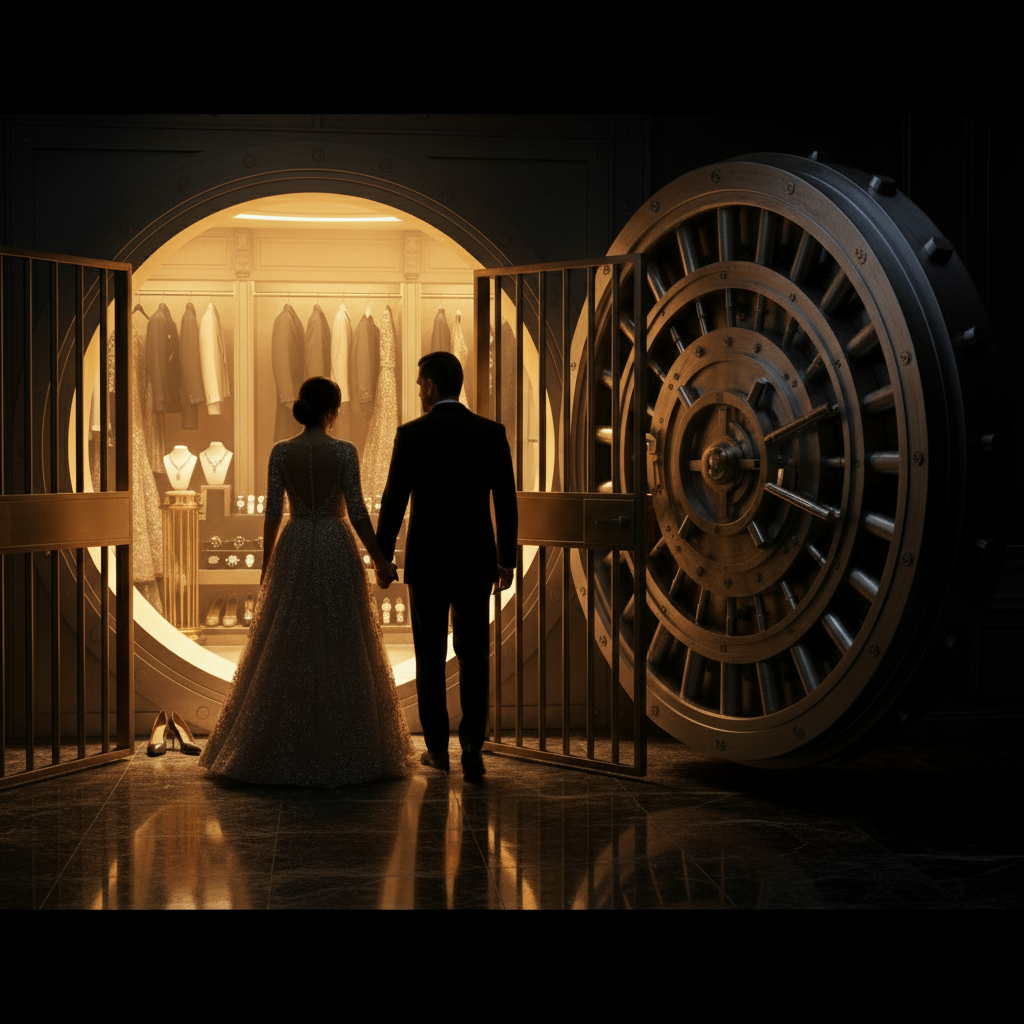
The allure driving the global market for true luxury is a complex tapestry woven from intrinsic human desires. The lives achieved at the highest tiers are a masterpiece of bespoke experiences, where resulting pleasures are not merely high-quality; they stand as true masterpieces, meticulously crafted to satisfy the deepest craving for distinction.
At its core, the driving force behind this colossal industry rests on a profound revelation, desire is not just about beauty or utility; it is fundamentally engineered by scarcity. The rational appreciation of an object’s quality gives way to a visceral, almost primal satisfaction: the real thrill lies in accessing what others cannot.
This profound psychological foundation is the invisible thread that links two seemingly disparate yet equally rarefied worlds: the exclusive, time-honored atelier of Haute Couture and the hallowed, often opaque sacred space of investment-grade indulgence, such as rare art, vintage wines, or limited-edition horology. Both realms fundamentally deal in the ephemeral luxury of the unattainable, operating entirely outside the predictable flow of mass consumption.
Fashion, Fine Dining – An Investment
The Allure of the Unattainable
By controlling access, these worlds actively nurture a sophisticated system, a true “cult of scarcity”. This system converts high prices from a barrier into a badge of honor, transforming a mere purchase into an initiation.
The underlying economic foundation of both the luxury goods sector and the highly exclusive dining and experience spheres is the very conscious and careful manipulation of supply. This strategic restriction is not a side effect; it is the central, non-negotiable business model. Whether it is a couture gown that requires hundreds of hours of hand labor, limiting production to a few dozen worldwide, or a grand cru vintage with a fixed, finite number of bottles, the value is inextricably linked to the certainty that most will covet, but few will possess. This deliberate constriction fuels the aspirational ecosystem, ensuring that the objects and experiences remain symbols of ultimate status and unwavering exclusivity.
The world operates on a currency far more valuable than mere money, scarcity and access.
Beyond The “Buy”
Accessorising Women
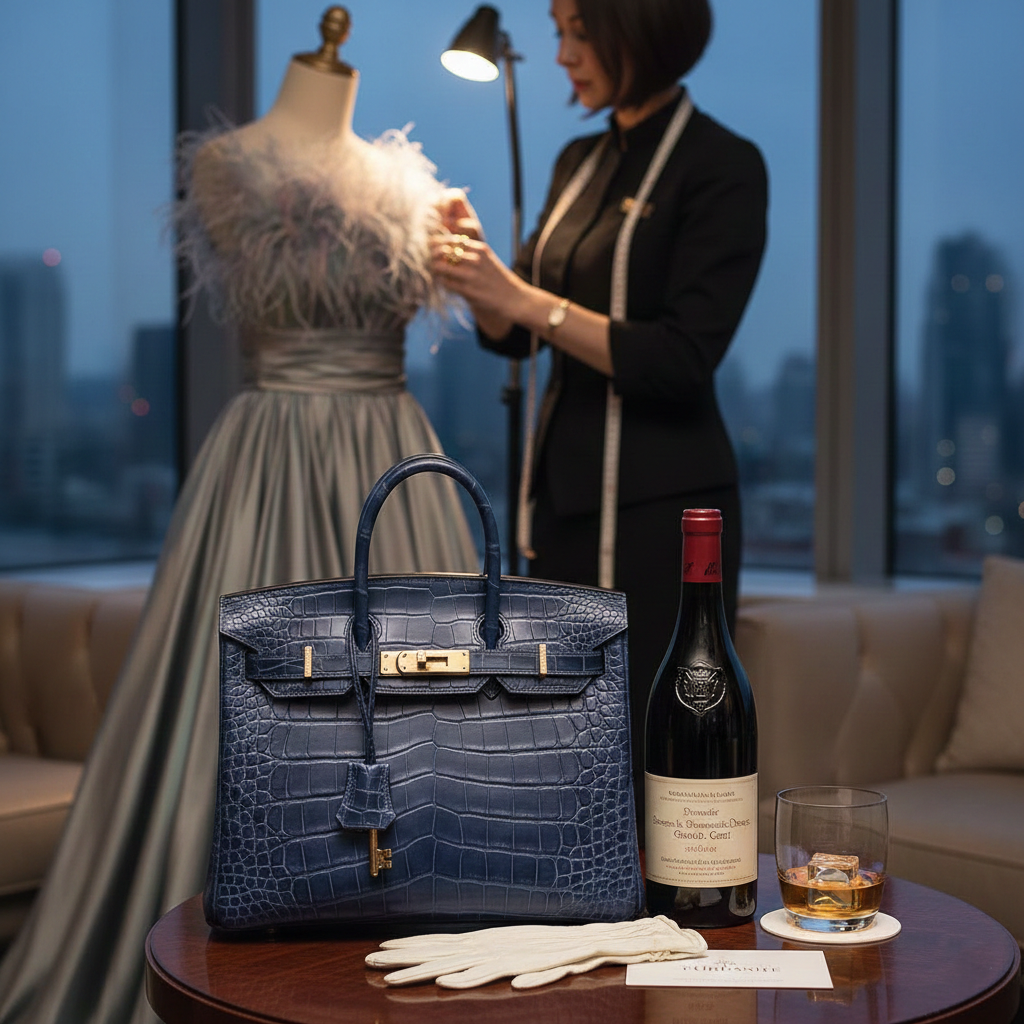
One considers the legendary Hermès Birkin handbag. To a casual observer, the item has a substantial retail price, but its true cost is immeasurable, as the real obstacle to ownership is not the financial outlay, but access. The true cost is far more than the retail price.
It is the infamous, cryptic waiting list, a system shrouded in mystery and rarely formalised. The absolute, unwritten requirement is the establishment of a preexisting relationship, a substantial and consistent purchase history across various product lines with the Hermès brand. This ensures that the bag is not simply sold to the wealthy, but bestowed upon a client whom the brand deems worthy. This exclusive process is managed by the brand’s gatekeepers, whose singular, unspoken nod is the ultimate key to acquisition, solidifying the Birkin as the quintessential status symbol defined by its inaccessibility.
This phenomenon is dramatically mirrored in the realm of Haute Couture gowns. These garments transcend the definition of clothing; they are singular, architectural works of art. Consider a hand-beaded Chanel dress or a revolutionary runway piece from Alexander McQueen. The value is intrinsically linked to the process: thousands of hours of painstaking hand stitching and meticulous artisanal labor go into its creation.
Furthermore, each couture piece is constructed with a unique, custom fit, molded precisely to the contours of the client who commissioned it. This level of customization ensures that only one person in the world possesses that exact item. This immediate singularity transforms the garment from a dress into an immediate collector’s piece and a legacy asset. Owning such a creation serves as a profound, undeniable declaration, a tangible proof of one’s unique position at the very apex of global wealth, influence, and appreciation for the highest forms of artistic craftsmanship. The possession of a couture gown or a Birkin bag is not just a purchase; it is a meticulously managed selection process that confirms the buyer’s status within a global peer group.
The Measure of a Man
Timeless…
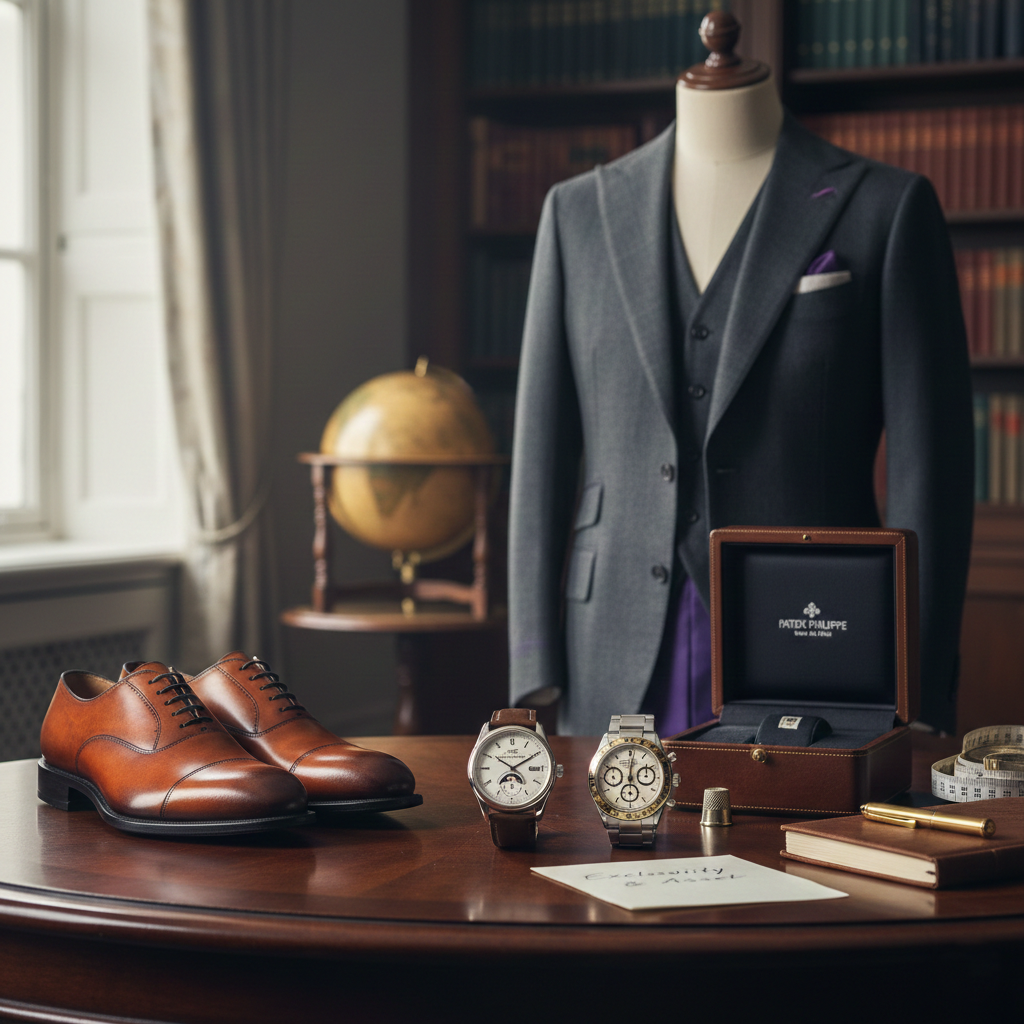
The principles of luxury are universally applied, extending with equal force and nuance to the realm of men’s high-end goods. This segment is defined not merely by expense, but by an unrivaled level of personalised scarcity.
Consider the quintessence of formal wear, a bespoke Savile Row suit. This garment is an experience, a meticulous collaboration between client and master tailor. Its fit, fabric, and unique stylistic elements are designed for one man alone, rendering it inherently unavailable and therefore supremely desirable to anyone else. Similarly, the world’s finest footwear, exemplified by a pair of hand-lasting Berluti shoes, represents a fusion of artistry and exclusivity. The precise, months-long hand-lasting process ensures a perfect contour and a unique patina that develops only with wear, a testament to the owner’s singular journey.
However, the ultimate status symbol that transcends these categories remains the men’s wristwatch. In the pantheon of luxury, a rare timepiece operates on multiple levels. A masterpiece like a Patek Philippe Grand Complication is the pinnacle of horological engineering. Likewise, a vintage Rolex Daytona, with its storied history and cinematic association, is a physical artifact of cultural significance.
These objects are far more than a mere device for telling time; they are a demonstrable, liquid investment. Their scarcity, brand heritage, and technical complexity ensure that their value appreciates consistently, positioning them not just as objects of beauty and personal pleasure, but as a measurable asset class. The act of possession is therefore a public proclamation, an irrefutable proof of both sophisticated taste and considerable financial acumen.
Wealthy, Not Rich
The Parure of High Jewelry
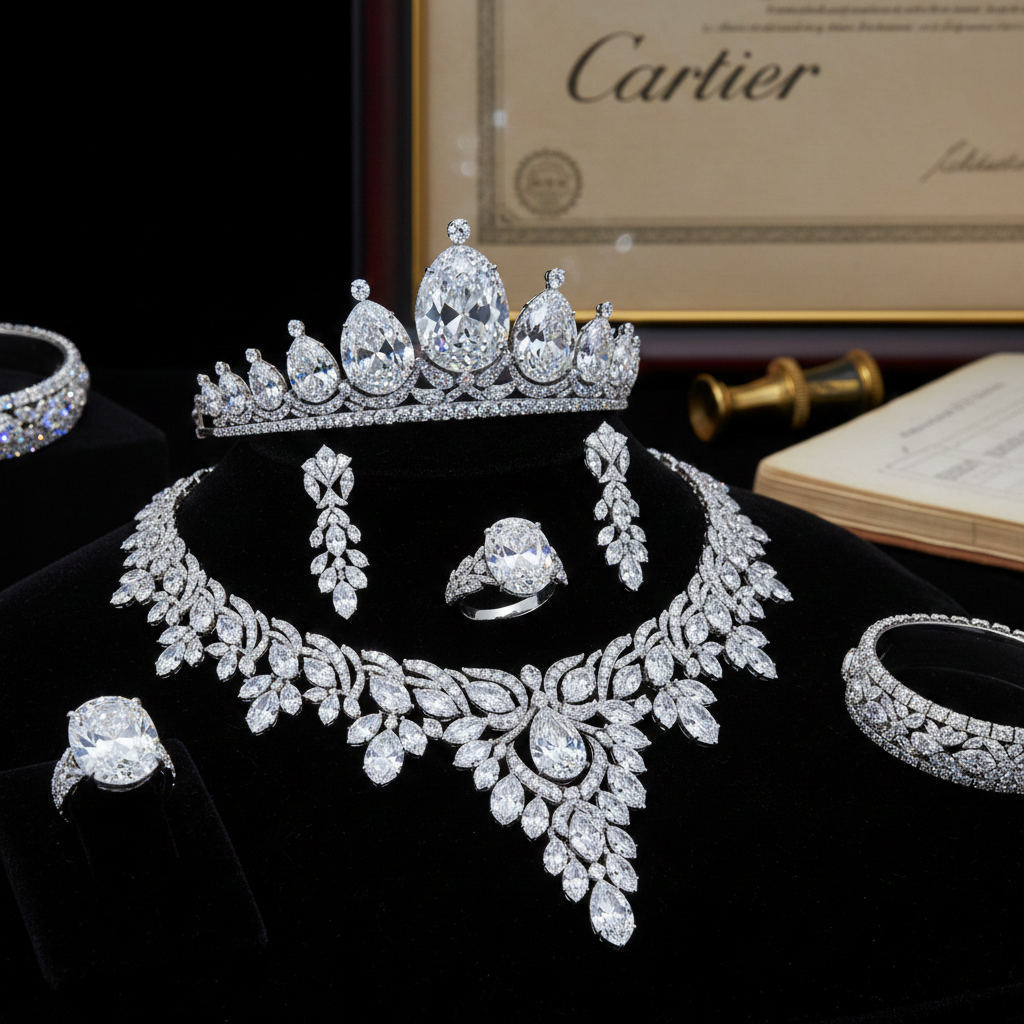
Being rich is not enough, it’s time to flaunt being wealthy so, a dazzling diamond parure, a meticulously curated, matching set of jewelry created by legendary Maison’s such as Cartier or Graff, stands as an object of unparalleled, breathtaking beauty. Beyond its intrinsic aesthetic value, however, it represents a far more significant asset, a tangible, appreciating investment. These extraordinary collections are not merely adornments; they are wearable works of art whose value is often insulated from market volatility and tends to climb steadily over time, offering a secure store of wealth.
Much like a high jewelry one-off masterpiece that marks a singular, groundbreaking moment in design, artistry, and gemology, a complete parure embodies both consumption and conservation. To acquire such a piece is to engage in a profound ‘consumption of history,’ a purchase that includes the heritage of the house that created it, the provenance of the rare stones, and the historical context of its design era. Simultaneously, it represents a ‘radical unavailability’ for others. The unified nature of the parure multiplies its rarity; finding individual stones of perfect quality is challenging enough, but sourcing a suite of perfectly matched, complementary stones for a complete set makes the parure a truly exclusive treasure.
Cuisine as Investment
Asset-Worthy Consumption

The ultra-luxury food and wine world has fully adopted the exact same gravitas, exclusivity, and psychological allure as high fashion and fine jewelry. This domain transcends mere sustenance; it operates as a sophisticated theater of status, where the objects of desire are rare ingredients and singular vintages.
The obsession with ingredients like the elusive Alba White Truffle or Kopi Luwak coffee is not purely, or even primarily, about a marginal difference in taste. Instead, the true appeal is a performance of profound connoisseurship. It is the ritualistic demonstration of having the financial means, the network, and the discerning palate to secure something inherently scarce and fiercely sought after. The true flavor experienced by the consumer is the psychological intoxication of having secured, savored, and publicly acknowledged possession of something so inherently limited edition. The luxury food market has effectively weaponized scarcity, making the narrative of the ingredient more valuable than the ingredient itself.
Rare Edibles and Fine Spirits
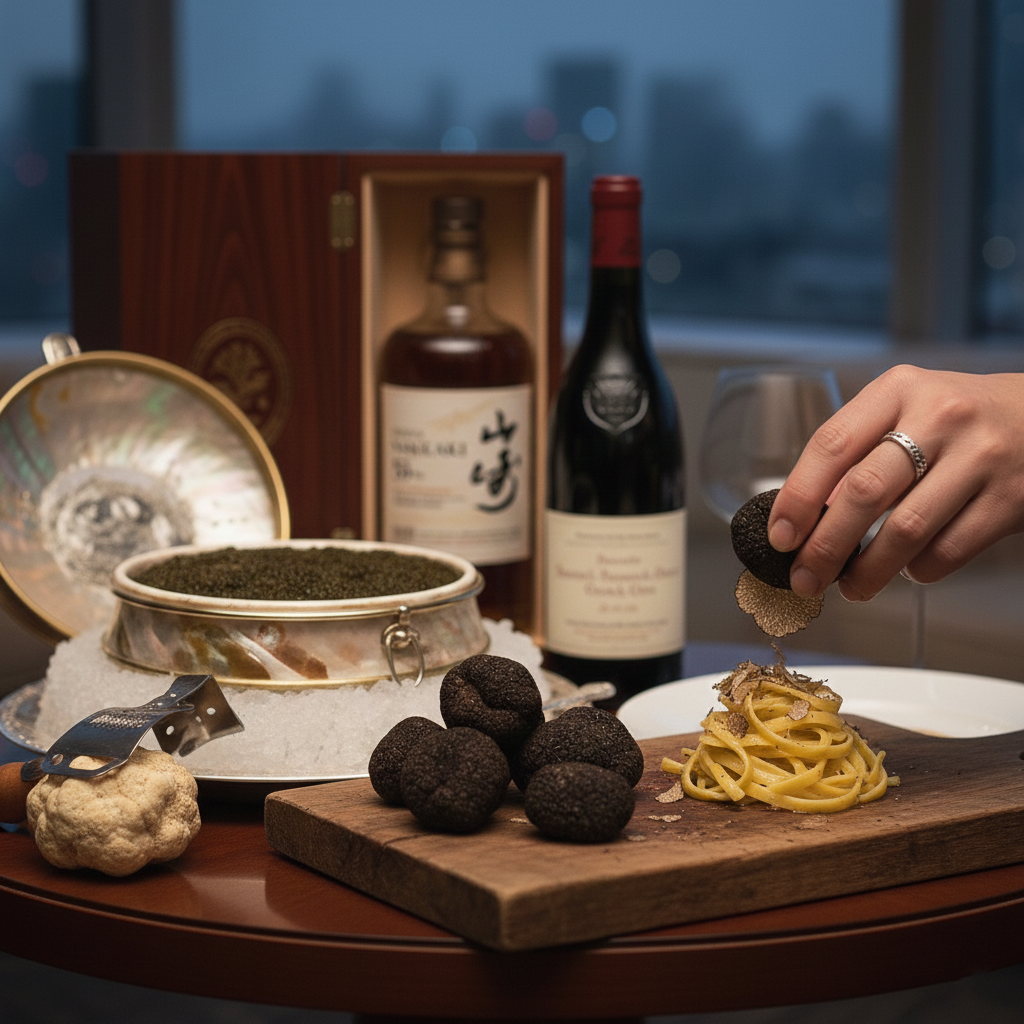
- Truffles: The Alba White Truffle provides a perfect example. The diner is not just tasting a fungus; they are consuming the adventure of its precarious harvest, the brevity of its season, and the stratospheric price that acts as a velvet rope.
- Caviar: Possessing a kilogram of the world’s finest Iranian Beluga caviar is like holding an exclusive drop of oil. It is proof that one’s palate, like one’s wardrobe, is curated beyond the common sphere.
- Wines and Whiskies: Bottles of a Domaine de la Romanée Conti wine or a prized Japanese whisky like a Yamazaki 50 year old are more than beverages. They are investment-grade indulgence. Their value rises not despite their consumable nature, but precisely because of it: each opened bottle increases the global scarcity of the remainder.
This is the curated craving for an indulgence where the story of rarity is more piquant than the dish itself.
Global Cuisines of Exclusion
This desire for the hyper-exclusive extends to the dining experience itself.
- Omakase: The Edamame style Omakase experience is a culinary performance defined by radical scarcity. The few seats at the counter, the chef’s personal selection of seasonal and rare fish, and the unspoken agreement to trust the curated expertise all contribute to an experience that cannot be bought off a menu.
- Nouvelle Cuisine: An exclusive Nouvelle Cuisine tasting menu uses ingredients flown in from remote locations, ensuring that the meal consumed is unavailable virtually anywhere else in the world, marking it as a singular occasion.
The Scent of Scarcity
High End Perfumes
The pervasive and insidious “cult of scarcity” extends its reach far beyond tangible, visible luxuries, infiltrating even the most ephemeral aspects of human experience. This is most evident in the air one chooses to adorn oneself with.
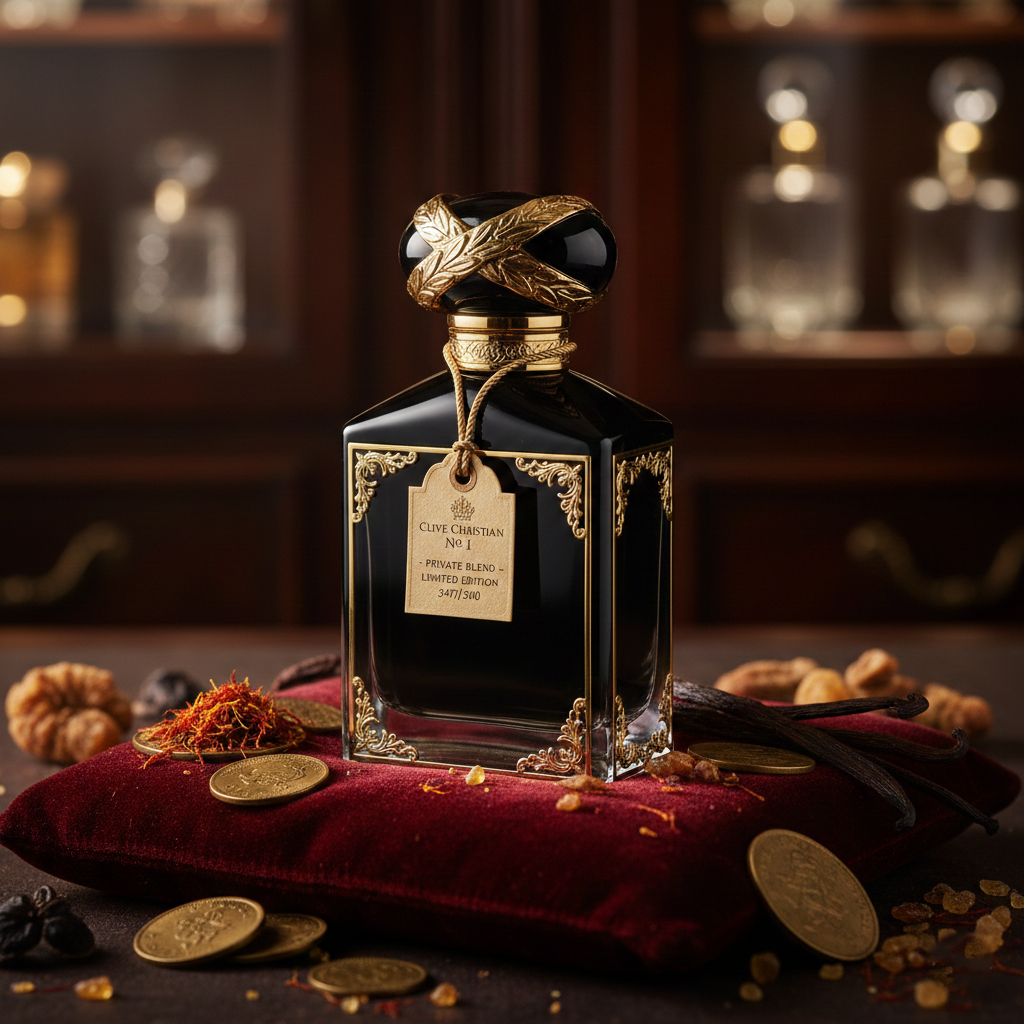
Exclusive, high-end perfumes, meticulously crafted and released in strictly limited production runs, stand as the olfactory testament to this manufactured desire. These rare fragrances are not merely scents; they are a deliberate, potent symbol of status, operating as the aromatic equivalent of a Birkin bag. Much like the iconic handbag whose value is intrinsically tied to its inaccessibility, these “niche” and “private blend” perfumes trade on the prestige of exclusion.
The consumer is not just purchasing a complex blend of notes; they are purchasing membership in a select group, acquiring a piece of an artificial rarity that signifies discerning taste and, crucially, financial clout. The knowledge that only a few thousand, or even a few hundred, bottles exist worldwide elevates the simple act of spritzing on a fragrance into a statement of unparalleled consumption. Fragrances like Creed’s Aventus or a special edition Clive Christian No. 1 gain value because their exclusivity is guaranteed. They are an invisible marker of the highest strata.
The Fetishization of Rarity
Exclusion is Everything

Ultimately, the driving force is the psychological thrill of possession. In a world saturated with high-quality goods that are easily purchased, rarity becomes the ultimate differentiator. It is the intangible friction of the acquisition process that truly bestows value. The individual who finally procures that specific handbag is not simply buying leather; they are buying the narrative of exclusion.
These hyper-exclusive ingredients and fashion items are the edible and wearable haute couture of the modern age, singular objects of desire that cater directly to the compulsion to own, to access, and to be defined by what one can acquire and others cannot. They are the twin pillars of a lifestyle defined by exquisite, purposeful scarcity. This is not just about luxury; it is about Proof of Access.
Author