


Every global city has its playgrounds for the wealthy, but Bengaluru’s version of decadence is subtler, smarter, and infinitely more intimate. At the intersection of fashion, food, and fetish, the city’s upper circles are crafting a new culture of indulgence—one that is invisible to the mainstream yet magnetic to those who belong.
In the city’s elite spaces, fashion is far removed from runway collections or mall couture. It is a language of personal expression and quiet power. Personal stylists double as confidantes, sourcing rare fabrics from Karnataka’s interiors and marrying them with European cuts. In certain circles, garments aren’t simply worn—they are ritually revealed at private gatherings, where the act of dressing and undressing is as much performance as wardrobe. It’s bespoke, it’s intimate, and it is designed for eyes that recognize craft, rarity, and audacity.
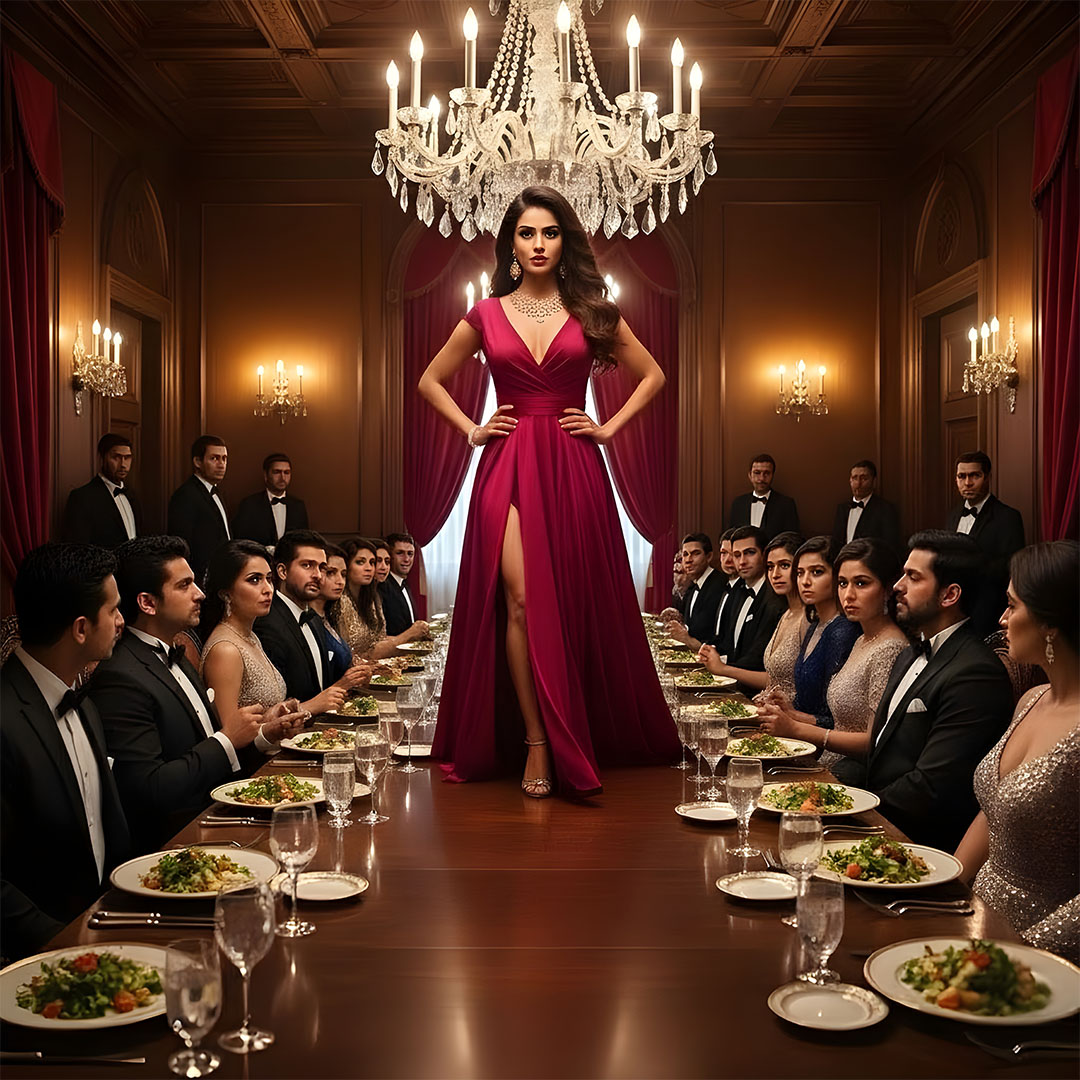
Food has undergone a similar transformation. Microbreweries and casual dining are passé; the city now favors multi-sensory culinary experiences. Imagine blindfolded dining beneath candlelit frescoes, courses paired with live music tuned to every bite, or menus inspired by astrological charts and historical archives. For Bengaluru’s elite, dining is no longer about sustenance—it is storytelling.
At the heart of this renaissance lies uber foods—not merely gourmet plates, but culinary statements built on rarity, provenance, and quiet luxury. Heirloom grains from Coorg are plated with molecular precision, forest-foraged truffles meet Kodava honey, and cocktails are smoked with Mysore sandalwood or infused with Himalayan botanicals. Each dish carries a narrative, whether it be a season’s harvest or a family recipe resurrected from a forgotten cookbook and reimagined with avant-garde techniques. For the discerning, to dine on uber foods is to taste legacy, innovation, and status. Every meal is an orchestrated memory, crafted for those who understand nuance, exclusivity, and experience as art.
Bengaluru thrives on juxtaposition. Fashion, food, and fetish collide seamlessly to create experiences that are at once traditional and globally avant-garde. Sarees meet streetwear; truffle risotto is served alongside fermented idli batter; classical ragas harmonize with electronic beats. The youth of the city, especially those immersed in creative, entrepreneurial, and cultural circuits, are the chief architects of this fusion. They blend heritage and modernity effortlessly, seeing culture not as a relic, but as a playground for experimentation.
And then there is fetish, whispered yet palpably present in Bengaluru’s private gatherings. This is not about indulgence in secrecy, but about exploring power, aesthetics, and intimacy. Avant-garde fashion pairs with performance art that teases boundaries; immersive experiences collapse the distinctions between food, fabric, and fantasy. These are evenings where senses are heightened, curiosity is rewarded, and cultural boundaries dissolve into charged encounters.
In Bengaluru, indulgence has become a sophisticated art form. Fashion is ritual, food is fusion and fetish, and every experience is orchestrated for the elite who understand that luxury is subtle, sensory, and intellectually charged.
Here, the city’s upper echelons are not merely consuming culture—they are curating it. Every garment, every dish, every whispered aesthetic choice contributes to a private universe where taste, heritage, innovation, and desire converge. For those who belong, Bengaluru is not just a city—it is a living, breathing manifesto of luxury and creativity.
To The Urbanite, what makes Bengaluru’s scene unique is its fusion of cosmopolitan boldness with local intimacy. These are not borrowed cultures. They are homegrown rituals of indulgence, shaped by a city that thrives on reinvention. Urbanite provides a luxury one no longer can see but feel through its expression of fashion, food and the fetish of the people of the city.
Author