


Why Backless Was Always In
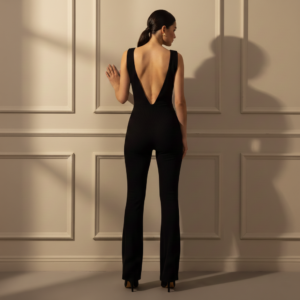
Backless outfits are a trend that is admired by many but can only be achieved by a select few. The reason for this is not because of body shape or size but more so focuses on the look itself that varies from person to person.But don’t worry, outfit repeaters! This is a safe space for fashion lovers and critics alike, where the concept of style is subjective, and not limited to categories of minimalist, maximalist, or trendy TikTokification of outfits.
Princess Diana and the post-divorce revenge dress
Before we understand how to achieve a flawless backless outfit look, let’s look at the generation of women who formed the archetype of ‘trendsetters’ back in the day.
Princess Diana, aka The People’s Princess, stunned at the Met Gala back in 1996 with her midnight blue silk slip dress scooped deep at the back. Her first and only appearance at the Met Gala was one that is remembered even to this day and reposted by many archival fashion accounts.
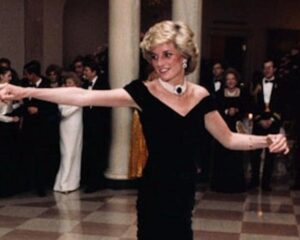
In the 1960s, body-fitting clothing with deep plunges marked the beginning of rebellion and reinvention. Radical designers at the time emphasized sexual liberation, specifically women’s liberation that celebrated the female form.
Meanwhile, the 1960s in Bollywood time was an experimental era for Indian fashion. Sharmila Tagore’s debut in ‘Aradhana’ brought with it new saree-blouse combinations with tight-fitted blouses, deeper necklines, and crisp pleated sarees that complimented the bodice.
This era of bodice-accentuating outfits was inspired by western clothing and continues today, proving cinema’s influence on challenging societal norms.
Meanwhile in the Western Era
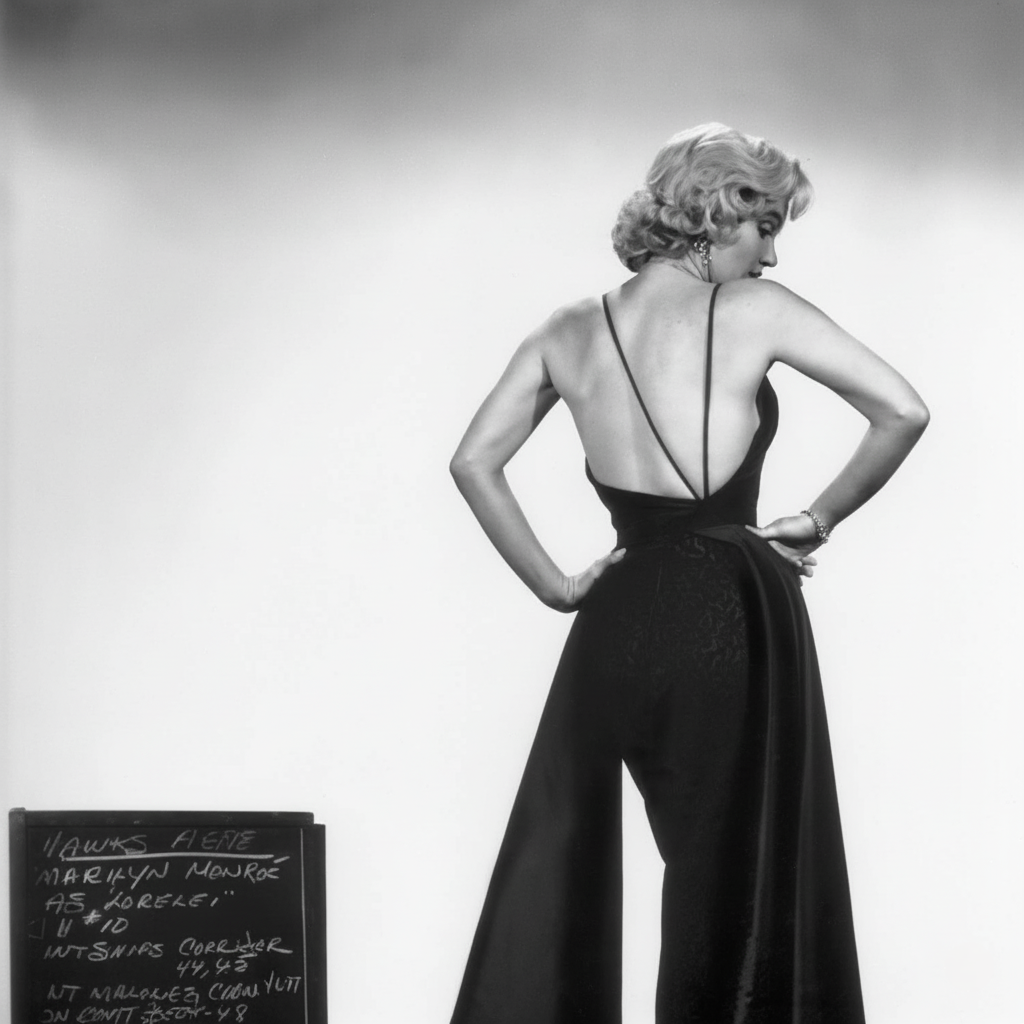
In the West, the earliest versions of backless garments can be traced to the early
20th century but rose in dramatic popularity during the Art Deco period of the 1920s and 1930s.
However, a fascinating precursor to the backless gown was the “venetian cloud” style in the 18th century: ball gowns with deep, artful draping at the back, designed so women could showcase elaborate hairstyles and jewelry with a sweeping reveal, but much of the skin was still covered by sheer fabrics.
In the 1930s, society’s evolving acceptance of tanned skin contributed to the backless craze.
Coco Chanel and other designers popularized bronzed skin as a symbol of luxury, making backless fashions both provocative and aspirational rather than taboo.
Indian Bodice “The Choli”
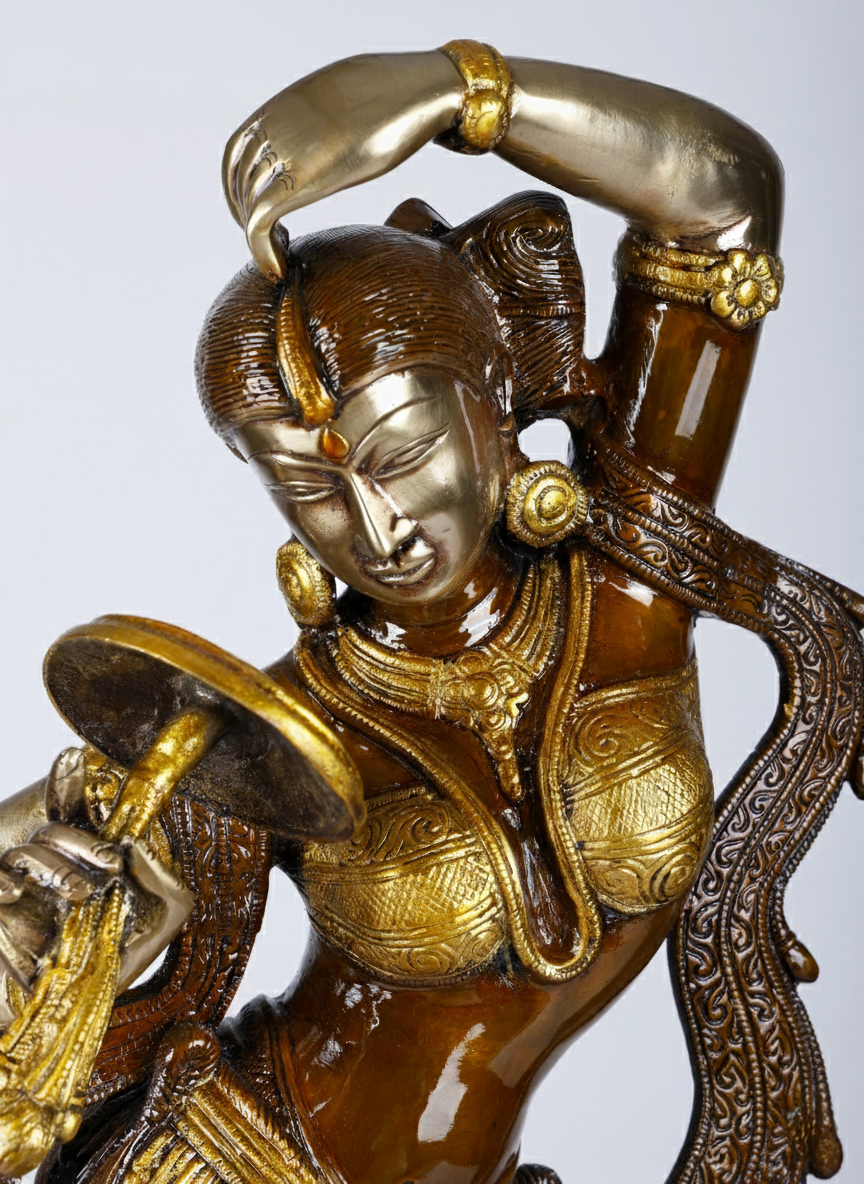
Long before blue eyeshadow and backless dresses became trendy again, backless blouses were not new to Indian women. Although, the conversation surrounding the backless look centers the question of showing how much skin is too much skin has always plagued Indian society. The history of its evolution is far more interesting to look at.
Sculptures and paintings from the Gupta and earlier periods frequently depict women in garments that either left the back bare or covered only minimally, showing that the backless aesthetic was both practical and embedded in early Indian fashion sensibilities, particularly to adapt to the subcontinental heat.
Certain traditional dances, such as Bharatanatyam and Odissi, used costumes with open backs and intricate ties, blurring the lines between sacred performance attire and everyday elegance.
A blouse, or choli, was the earliest Indian blouse, bodice-fitting and covering the bust, with designs varying by region and function. In Gujarat and Rajasthan, a choli is usually backless and tied with strings.
In Tamil Nadu, it tends to have a conservative neckline.
Indian women changed the styling of their blouses according to the climate.
It was only later, during the British regime, that modesty culture was conceptualized and enforced on women from elite and educated families.
The simple choli and draped saree were now considered improper, replaced by high-collared Victorian blouses with puffed sleeves.
Choli Ke Peeche Kya Hai?
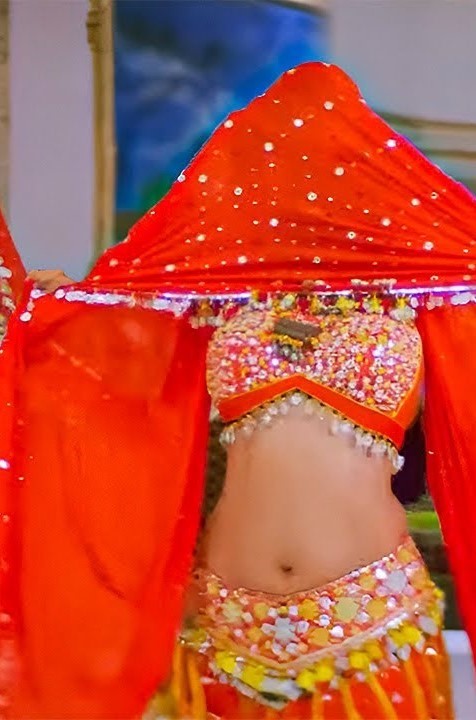
In 1993, Madhuri Dixit’s controversial performance in “Choli Ke Peeche Kya Hai” led to bans on national television and radio due to public outcry of vulgarity.
Dixit’s response to this was as classy and simple as she is—stating that the performance is an artistic statement that plays on flirtation and empowerment, reflecting women’s ability to navigate sensuality, and stigma by reclaiming narrative.
A performance that sparked conversations around agency, sexuality, and tradition was heavily inspired from traditional Rajasthani folk style whose roots stemmed from cultural celebrations and not vulgar expression of sexuality, which was maintained by both lyricist Anand Bakshi and Director Subhash Ghai. Once again, the dialogue surrounding women’s sexuality and its expression lies solely for public consumption and when it’s not palatable enough for audiences, outrage deafens expression.
The Art of Subtle Seduction in everyday dressing
Rakshitha, an undergraduate student, tracks her memory back to her grandmother’s blouses which she remembers as a work of cinema.
A bold statement she says, after pausing for a moment for the right word that fits the fantasy type nature of these blouses.
Khushi’s response to backless outfits is similar to Rakshitha’s in the way that it is tied back to a pivotal moment in time.
Currently working as a student engagement counsellor, she reminisces her first encounter with backless outfits by recounting a moment from her childhood.
Growing up in an orthodox Telugu household, any piece of clothing that showed skin was looked down upon and was subject to judgmental looks from her family.
Wearing backless outfits, she says, then becomes an ongoing exercise in practising being comfortable in one’s skin. Or ‘exposure therapy’ as she simply calls it.
As comments against the body does, it left an imprint on Khushi’s mind which made it difficult to get to a point where she likes wearing backless outfits again.
Her own internal values were then coloured by judgements that weren’t hers to carry, so she says that while she does like the look itself– she wouldn’t be drawn to it.
Traditional versus modernity in new age fashion
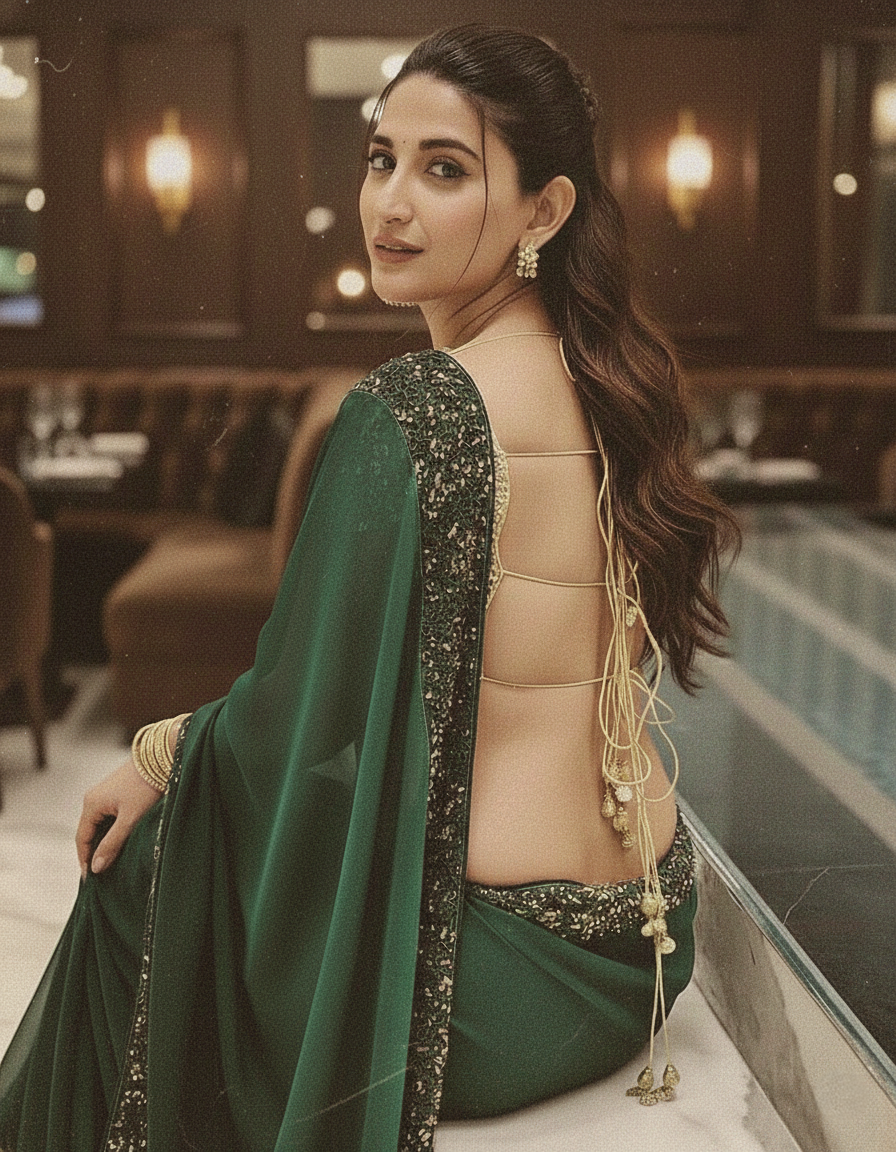
Over-call, Khushi agrees that older women are judgmental to the modern day styling of blouses.
Khushi and the other people that were interviewed for this story were aware of the history behind traditional blouses, and its marking of modesty culture prior to the questions that prompted the conversation.
Khushi offers that the reason behind the judgement that young women are subjected to could be because of male validation. “It’s something that our generation has faced and moved past, but the older generation think we still practice”
We (women) just like dressing up for ourselves and not for anyone else. She adds that for older women, they prefer the traditional nature of styling as a way of status.
Less Experiementing, more conformity:
Aishwarya, a first year student pursuing their undergraduate degree, draws a comparison of the traditional versus modernity debate with examples of their own style.
While Aishwarya prefers loose fitting clothing that provides them more space to experiment with their gender. They like switching their style from ‘genderless blob’ to flaunting outfits that accentuate their back.
Speaking on the history of traditional blouses, Aishwarya reminds us of just how much creativity is missed out on by choosing the trendy blouses that are pushed by fast fashion brands.
“When you do that, you miss out on the different kind of patterns and cuts that can be brought out from just the cloth alone”
When asked about the reason behind the preference for traditional blouses, they say that it’s because of the older generation’s eye for the simplistic template that is usually paired with silk sarees–as opposed to the younger generation’s preference for wearing spaghetti tops or sleeve cuts.
Busting the one-size fits all myth:
In conversation with each person, when the question of whether backless outfits are suitable for all body types was brought up, each person responded positively with a resounding “yes, it can be worn by people of all body types”
However, each positive response followed a caution of: If worn right. Aishwarya elaborates on this to say:
“Backless outfits are suitable for people of all shapes and sizes but its marketing targets a certain straight body type which ultimately enforces the body type.
The clothing that is made for (plus sized) people does not fall into this category, and thus not much attention is given to the clothing. There is no effort.”
“Capitalism is the key cause factor here. People feel like backless outfits are not meant for them because of the low cost material used to make plus size clothing, which is a problem that can be handled swiftly with effort from the designer’s side”, Aishwarya stresses.
An Insight from within the Fashion Industry
Ramesh Dembla, a well-known Fashion Choreographer based in Bangalore, has this to say about the evolution of traditional to
modern blouses in new-age fashion: “The modern fabrics have brought back the previous generations’ styles back to life, and this is noticeable even in men’s fashion as the skinny fit with flared or bell bottom fit is back in fashion.”
When Mr. Dembla was asked if backless outfits are suitable for all body types, he said that the question is not limited to the body type alone, but whether the person has the confidence to carry the outfit, not just as an act of defiance or imitating anyone.
He draws his own experiences from a fashion show that was held by his label in early October. But when it comes to the work of his label, Mr. Dembla states that their work aims to be as inclusive as possible to cater to their diverse clients.
A chance for dialogue
Backless outfits are no longer just an outrageous statement. Their history has a lot more to say and be studied rather than just be reduced to an act of rebellion by the person wearing them.
They should instead be studied from the women wearing them despite the scandal and the scrutiny that they face in their lives from college campuses to the streets.
Author