




Talent everywhere… Nowhere to Perform
Bengaluru, a metropolis that sells itself on the twin promises of imagination and modernity, is caught in a quiet, frustrating paradox. The city is overflowing with brilliance, with talent that spills out of terrace studios, rehearsal rooms, and jam pads, and its audiences show up with a hunger most cities would envy. Yet, this cultural capital of the South finds itself chronically short of the one thing that allows artistic brilliance to truly bloom: a dependable, dignified performance platform, which cannot be called anything else but a void.
The cracks in the foundation didn’t appear overnight. They widened years ago, around the time a wave of closures silenced cherished urban cultural spots. Gigs were suddenly cancelled hours before showtime, promoters scrambled for last-minute permissions, and artists learned that “venue confirmed” often meant very little here. This instability was born from a bureaucratic nightmare. Licensing labyrinths, mixed zoning, and missing occupancy certificates indicate a regulatory system designed without the slightest understanding of how performance life actually breathes.

The problem is deeper than paperwork; Bengaluru has simply never built the tiered, intentional performance ecosystem that great cultural cities take for granted. This reality echoes in the words of Grammy-winning composer Ricky Kej, whose career has taken him across the world’s finest venues. He notes that the city lacks that single “absolutely world-class” benchmark venue that announces a cultural capital’s identity, the kind every artist dreams of performing at. He stresses that in nearly every major auditorium, something vital is always lacking: “sometimes the auditorium may be a beautiful auditorium but it does not have a great built-in sound system, or the lighting isn’t that great or it does not have an audio visual screen.” For an orchestra, he points out, there is “not a single theater which works for acoustics where an orchestra can perform without any microphones.” This lack of intentional design means the city is missing its own Carnegie Hall, forcing artists to constantly innovate workarounds instead of focusing on their craft.

This deficiency is most keenly felt when mapping the city’s stages. The beloved Ranga Shankara, while a sanctuary for theatre with its perfect sightlines, is ultimately too intimate. Its capacity of 320 seats cannot stretch to meet the needs of a modern metropolis, causing touring acts that need 700 or 2,500 seats to skip Bengaluru entirely. Likewise, the iconic Chowdiah Memorial Hall carries the fatigue of its age, demanding artists and technicians create frustrating workarounds for its uneven acoustics and cramped backstage corridors. Even the soulful Janapadaloka, a repository of folk heritage, is too technically minimal and modest in scale to meet contemporary professional demands.
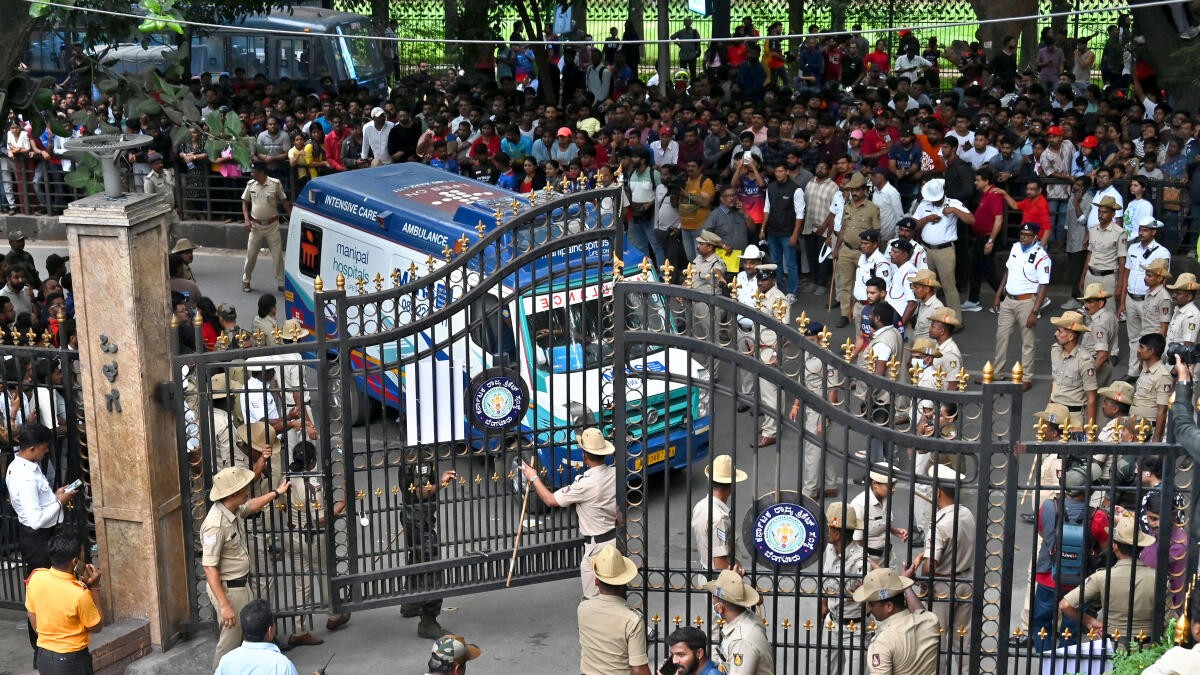
The true fragility of the city’s infrastructure revealed itself not just in inconvenience, but in tragedy. The crowd crush outside the M. Chinnaswamy Stadium during the RCB match was a stark infrastructural failure. It proved that the platforms the city relies on are not built with crowd science in mind, lacking the ingress, egress, and safe flow to handle the sheer emotional density of modern audiences.

Then came the global embarrassment: Trevor Noah’s aborted show at the Manpho Convention Centre. His cancellation was a moment that crystallized the long-brewing truth: that this sprawling hall, optimized for weddings and trade expos, has repeatedly tried to moonlight as an arena without acquiring the technical spine of one. Noah’s struggle with inaudible sound exposed the venue’s acoustically unruly reality, underscoring that the reliance on retrofitted spaces risks undermining world-class talent.
This deficit extends to the grandest outdoor spaces. Palace Grounds and Sree Kanteerava Stadium possess the acreage for spectacle, yet their potential is constantly throttled by legal disputes, inconsistent permissions, and fundamentally flawed logistical design. Ricky Kej highlights a critical logistical failure with outdoor venues: “you can have a fantastic concert experience, but if the infrastructure is not good or if audience members have a bad experience while leaving the venue then basically the entire experience goes for a toss.” This maddening inconsistency means scale alone does not make a world-class platform.

Compounding all these flaws is the unglamorous but crippling failure of parking. This lack of integrated, dignified audience movement, from the chaos of circling congested feeder roads to hours lost searching for a spot is a powerful antagonist in Bengaluru’s cultural narrative. It contributes as much to the city’s cultural fatigue as any acoustical glitch, making the simple act of attending a performance feel like a punishment. The conversation for Bengaluru can no longer be framed around nostalgia or minor fixes. It needs a cultural plan, not cultural patches. This is why the fully opened Prestige Centre for Performing Arts, a purpose-built complex designed with professional acoustics, flexible seating, and a Grand Auditorium with over 1,000 seats, is viewed with desperate curiosity. It signals ambition and the first step toward building an ecosystem where acoustics, architecture, audience movement, hospitality, and technology are “woven seamlessly together.”
Bengaluru must recognize that platforms are not ornamental luxuries; they are civic necessities. They determine whether an artist stays, grows, and belongs. They determine whether an audience feels cherished. The city has the will and the resources; it now needs to take the true step toward an ecosystem that finally allows its talent and its devoted audience to flourish in tandem.
Author









Shankar Subramanya
December 5, 2025 at 10:39 am
Nicely put. However just critique is insufficient. There have to be thoughts or ideas as to how to improve this situation.